
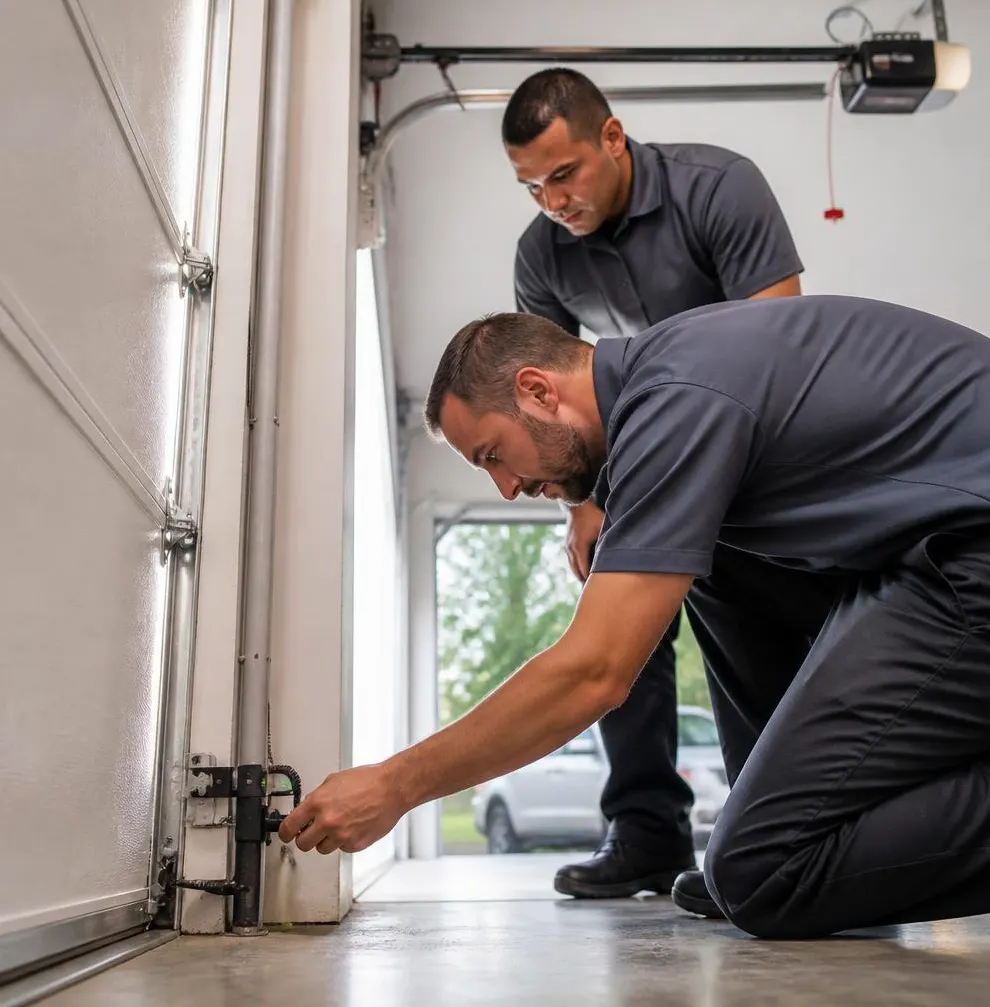
What a Technician Sees This Time of Year
Once the afternoon downpours taper off and the air finally dries out, our service calls shift. Instead of "my door won't close in the storm," we start hearing "it's making a grinding noise it didn't make in August" or "the weatherstripping is cracked and I can see daylight along the bottom." What's happening is simple: the door spent months swelling, rusting a little, and absorbing moisture, and now that the humidity is dropping, all that wear becomes obvious. Winter prep here isn't about freezing pipes or snow load. It's about catching the damage storm season left behind before it turns into a stuck door or a snapped cable on a cold morning.
Why Florida Winter Still Matters for Your Garage Door
DeLand doesn't get harsh winters, but the drop in humidity and occasional cold snap change how a garage door behaves. Wood and composite panels that swelled with moisture all summer start to shrink and dry out, which can loosen hardware or open small gaps around the frame. Metal parts that picked up surface rust from salt air or humid air now get exposed as grime dries and flakes off. And steel springs lose a small amount of flexibility in cooler temperatures, so a spring that was already weakening from a summer of heavy use is more likely to fail in the next few months. None of this is dramatic, but it adds up, which is exactly why a seasonal check makes sense now rather than waiting until something breaks.
A Practical Winter-Ready Checklist
1. Inspect Weatherstripping and Seals
Walk around the door and look at the bottom seal and side weatherstripping. Humidity and heat cause rubber to swell and soften over the summer; as it dries out, it can crack, flatten, or pull away from the track. Cracked or brittle seals let in cooler drafts and, more importantly, water during the next heavy rain. If you can slide a piece of paper under the bottom seal in multiple spots, it's time to replace it.
2. Lubricate Hinges, Rollers, and Tracks
Salt air and humidity are hard on metal hardware, and even homes well inland pick up some corrosion over a wet season. Clean visible rust or grime off hinges and rollers with a dry cloth, then apply a silicone-based garage door lubricant to hinges, rollers, and the track. Avoid heavy grease, which attracts dust and grit that can jam rollers over time.
3. Check Springs and Cables for Rust and Fraying
Torsion springs and lift cables take the most mechanical stress on the door, and they're also the parts most likely to show corrosion first. Look for rust spots, visible gaps between spring coils, or frayed strands on the cables. These are not DIY repair jobs since the springs are under heavy tension, but spotting a problem early means a planned repair instead of a door that won't open on a Monday morning.
4. Test the Door's Balance
Disconnect the opener by pulling the release cord, then lift the door halfway by hand. It should stay in place on its own. If it drifts down or shoots up, the springs are out of balance, likely from months of heat cycling and use. An unbalanced door puts extra strain on the opener motor and can wear it out faster.
5. Clear Debris from Tracks and Hardware
Storm season leaves behind leaves, pollen, and grit that settle into the tracks and around the bottom seal. Vacuum or wipe out the tracks and check that nothing is obstructing the rollers. A clogged track is one of the most common causes of a door that suddenly starts running off-center.
6. Test the Opener and Safety Sensors
Cooler, drier weather is a good time to confirm the auto-reverse feature still works. Place a block of wood or a roll of paper towels in the door's path and close it; the door should reverse on contact. Also wipe down the photo-eye sensors near the bottom of the tracks. Humidity and summer grime can leave a film on the lenses that causes false readings or a door that refuses to close.
7. Tighten Loose Hardware
Vibration from wind during storm season and natural material expansion and contraction can loosen bolts on the track brackets and opener rail. A quick pass with a wrench on visible hardware prevents rattling and keeps the door running straight.
When to Call DeLand Garage Door Experts
If your door is off balance, a spring shows visible rust or gaps, or the cables look frayed, stop testing it yourself and call us. Our Garage Door Maintenance & Tune-Up service covers exactly this kind of seasonal check: lubrication, hardware tightening, balance testing, and a full inspection of springs and cables so you know what's holding up before it fails. If a cable or roller is already showing wear, our Cable & Roller Replacement service gets those parts swapped out before the issue turns into a jammed or off-track door. Either way, it's a quick visit now versus an emergency repair call later when the door won't open at all.
If you're in DeLand, Orange City, Deltona, DeBary, Lake Helen, Daytona Beach, Sanford, or Ormond Beach and want your garage door checked before winter settles in, call DeLand Garage Door Experts for fast, honest service from a local garage door technician who knows exactly what Volusia County weather does to a garage door over a year.